
A fault is a sliding surface within the Earth’s crust that is pushed by forces acting from the mantle. These forces act on the crust generating deformation that, over time, progressively increases the stress in the rocks.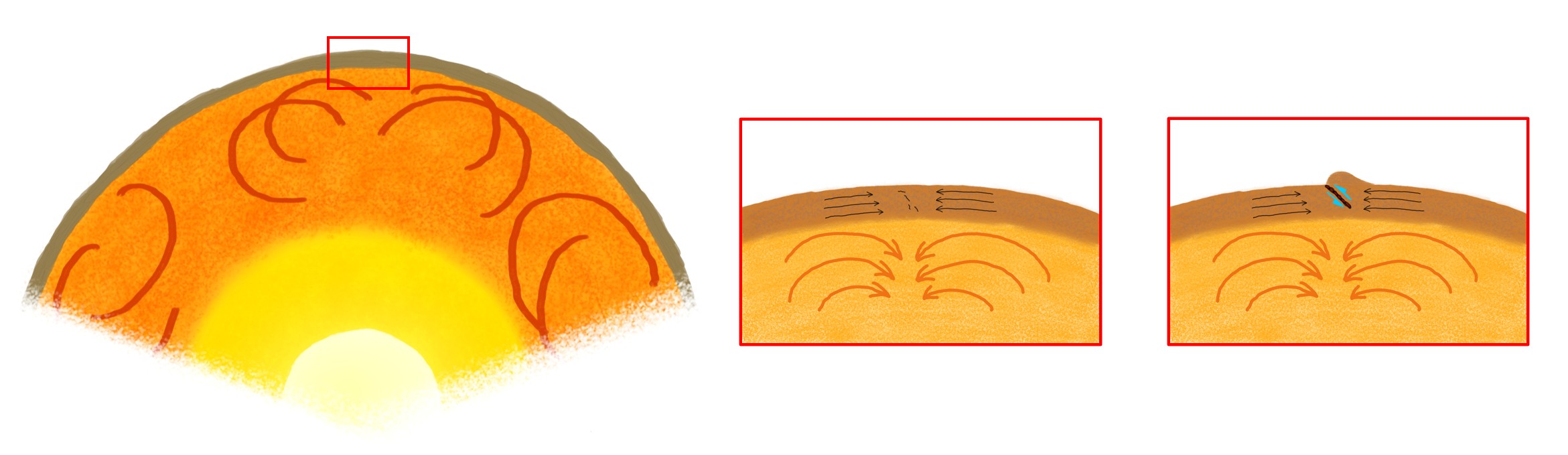 The Earth’s crust slowly deforms, storing energy like an elastic material, until it reaches a critical point: when it can no longer sustain the stress accumulated over years, the rock breaks in seconds.
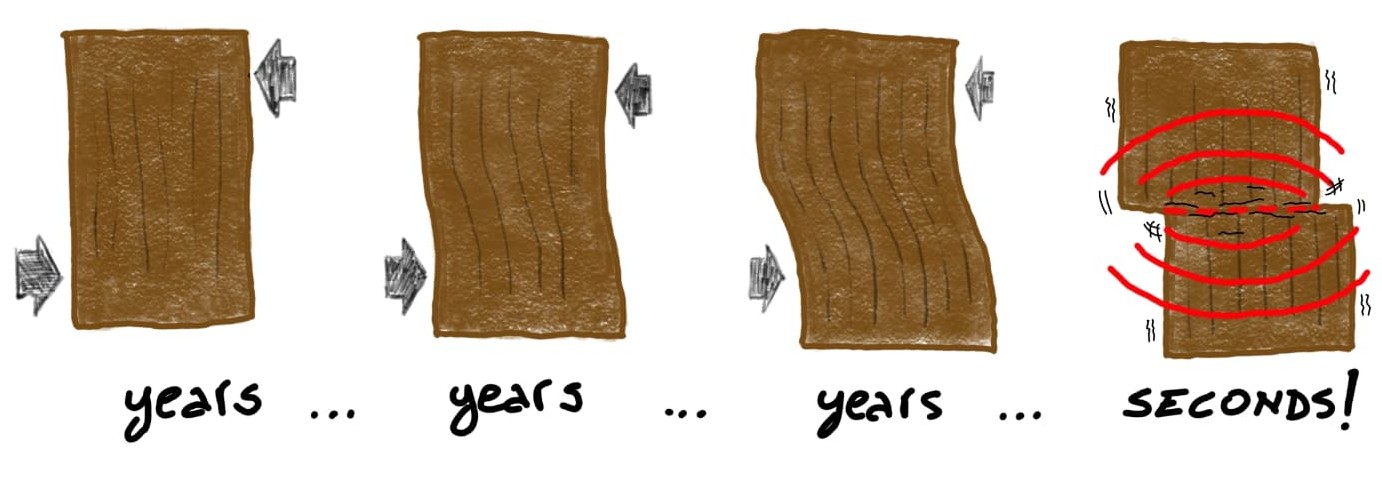 Some of the energy is released in the form of seismic waves, which propagate through the earth, and some of the deformation is recovered through the sudden sliding of the contact surface between the two blocks of rock, i.e., the fault.
This process is known as elastic rebound and is the mechanism proposed in the early 20th century, and still valid today, to explain the origin of earthquakes.
Although it is not possible to predict an earthquake, knowing where the faults contributes to properly assess seismic risk and reduce the impact of earthquakes.

